

Capacitance Level Transmitters
GENERAL FEATURES
Download PDF
- Measures level using changes in electrical capacitance
- Works by detecting capacitance variation between probe and vessel wall (or reference electrode)
- Capacitance changes as level varies due to dielectric differences
- Converts capacitance variation into accurate level signal output
- Suitable for both conductive and non-conductive liquids
- Applicable for slurries and granular solid materials
- Can be used for interface level measurement
- Reliable performance across a wide range of industrial applications
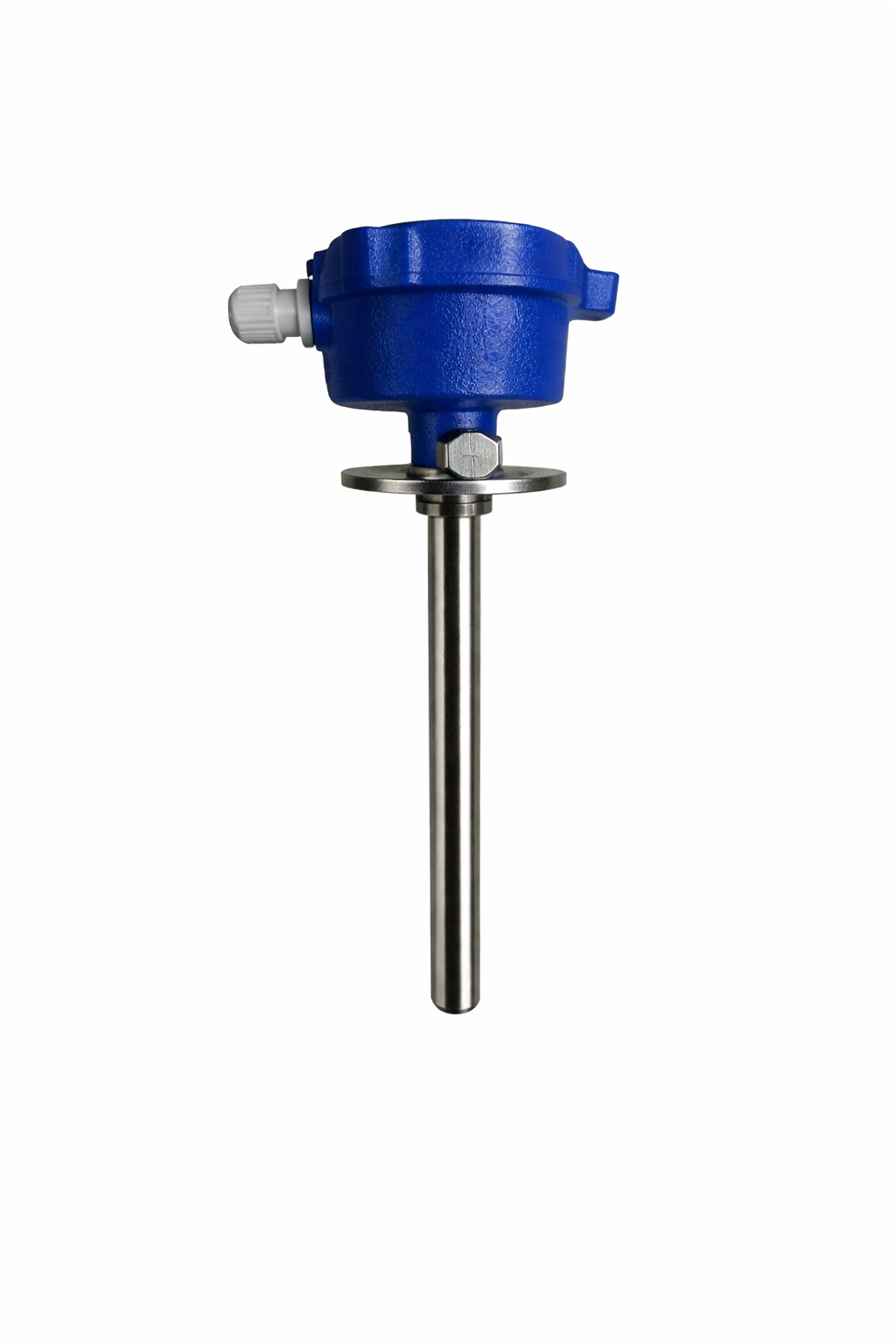
Material Data
| COMPONENT | MATERIAL |
|---|---|
| Probe / Electrode | SS 316L, Hastelloy C, PTFE-coated SS, Titanium |
| Probe Insulation | PTFE / PFA / Polypropylene / Ceramic |
| Process Connection | NPT / BSP Screwed, ANSI / DIN Flanged |
| Housing / Head | Aluminium Die-cast / SS 304 / Polycarbonate |
| Cable / Conduit Entry | M20 x 1.5 / ½" NPT, SS 316 / Brass gland |
| Seals / O-rings | Viton / EPDM / PTFE / Buna-N |
Design Features
- Suitable for conductive and non-conductive liquids
- Measurement range: 50 mm to 20,000 mm
- Operating temperature: -40°C to 200°C (standard)
- Operating pressure: up to 40 Bar (standard)
- 4–20 mA analogue output as standard
- SPDT relay output for high / low level alarms
- IP 66 / IP 67 weatherproof enclosure
- Built-in sensitivity adjustment and self-calibration
- EMI / RFI shielded electronics
Request a Quote
Need pricing or technical assistance? Fill out the form below and our engineering team will contact you shortly.